


Updated June 2026
Most bloggers do not struggle because they write badly.
They struggle because they publish articles nobody searched for.
They spend hours writing a post, hit publish, and then watch it get zero traffic.
Not because the writing was poor. Because nobody was looking for that topic in the first place.
Keyword research is not about finding big numbers. It is about finding questions people already want answered.
This guide shows you how to find those questions before you write a single word, using mostly free tools and a process any beginner can follow.
What Keyword Research for a Blog Actually Means
Before touching any tool, you need to understand what a keyword actually is and why it matters.
A keyword is simply the phrase someone types into Google when they want an answer.
Not the answer itself. The question they are searching for.
When someone wants to track their clients, they do not search “CRM.” They search “how to track clients without expensive software” or “free CRM for freelancers.”
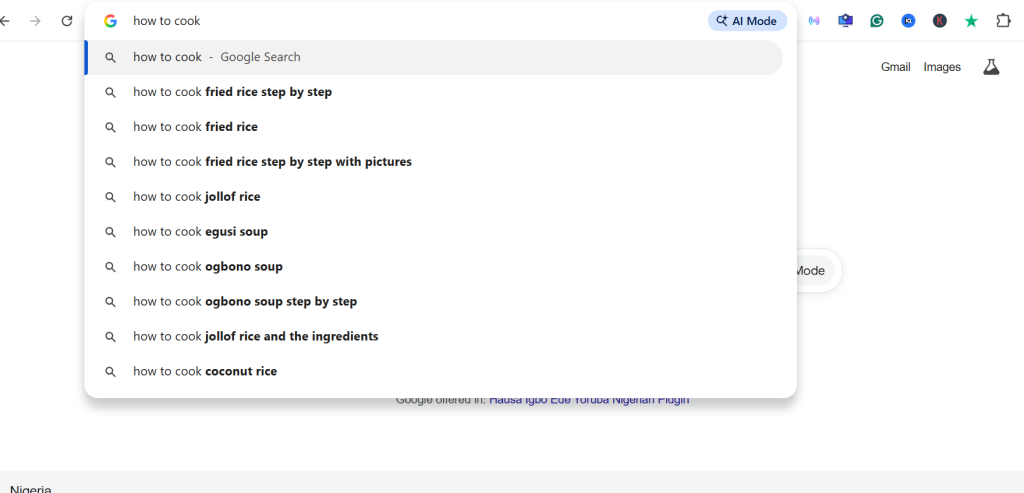
That gap between what you think people search and what they actually type is where most blogs fail.
Search Intent – The Most Important Concept in Keyword Research
Every search has an intent behind it.
Someone searching “AppSumo” wants to know what it is.
Someone searching “is AppSumo worth it?” wants a recommendation before buying.
Someone searching “AppSumo alternatives” is already using AppSumo and looking for something better.
Those are three completely different people with three completely different needs, even though they all relate to the same product.
Writing for the wrong intent means your article will not rank, even if it is well written.
When you learn how to do keyword research for a blog properly, you are not just finding words.
You are matching the right question to the right type of article.
A Simple Example
Too broad: business software
Better: business software for small businesses
Even better: best free business software for small businesses in 2026
The more specific the phrase, the more it matches a real question a real person is already typing.
Specific keywords have less competition. They have a clearer intent.
And they bring visitors who are much more likely to read and engage with what you wrote.
Start With Google Before Any Tool
Most beginner bloggers go straight to Ahrefs or Semrush and feel overwhelmed by numbers.
Start with Google instead.
Google shows you exactly what people are searching for in real time.
And everything you need for early keyword research is already built into the search results page.
Method 1 – Google Autocomplete
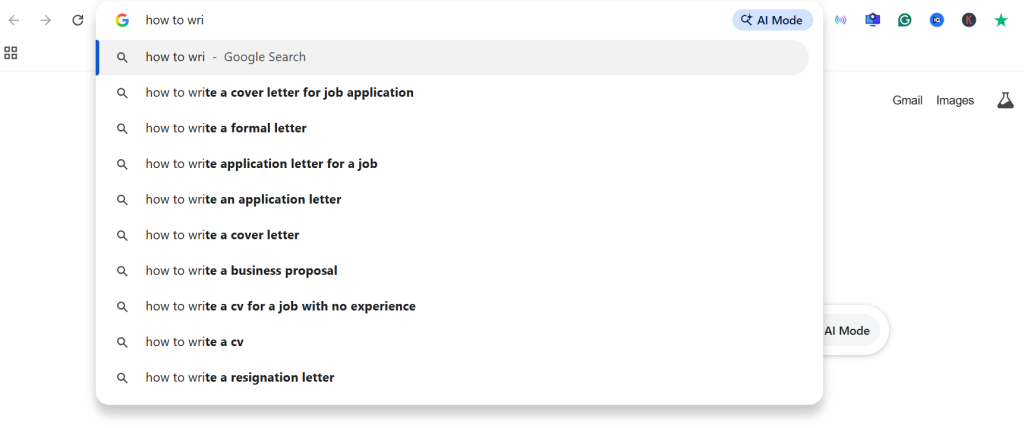
Open Google and start typing your topic.
Do not hit enter yet.
Watch what Google suggests before you finish the phrase.
Those suggestions are not random. They are the most common searches related to what you started typing.
Google is showing you what people actually want.
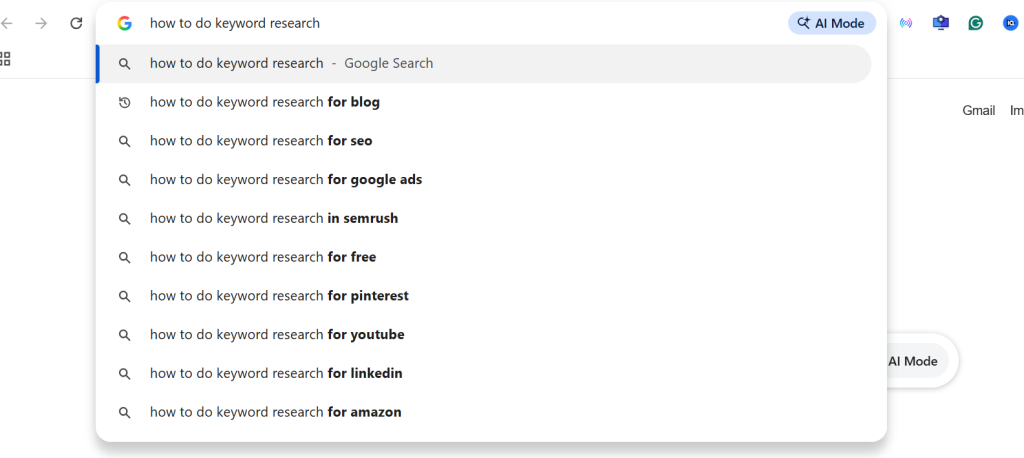
Type “how to do keyword research,” and you will see suggestions like:
“How to do keyword research for a blog”
“How to do keyword research for free”
“How to do keyword research for YouTube”
Each of those is a real post idea with real search demand behind it.
Write down every suggestion that fits your niche. Then go back and try different starting phrases. Each one generates a fresh set of ideas.
Method 2 – People Also Ask
Search any topic on Google and scroll down until you see the “People Also Ask” box.
This section shows you the exact questions real people are asking about that topic.
Each question is a potential blog post.
Click one question and the box expands, showing you more related questions underneath. You can keep clicking, and the list keeps growing.
People Also Ask is one of the most underused free keyword research tools available.
It gives you search intent, question format, and topic ideas all in one place.
For a beginner learning how to do keyword research for a blog, this section alone can generate weeks of content ideas.
If you want to expand question research further, AlsoAsked pulls related questions from People Also Ask across multiple searches at once.
Method 3 – Related Searches
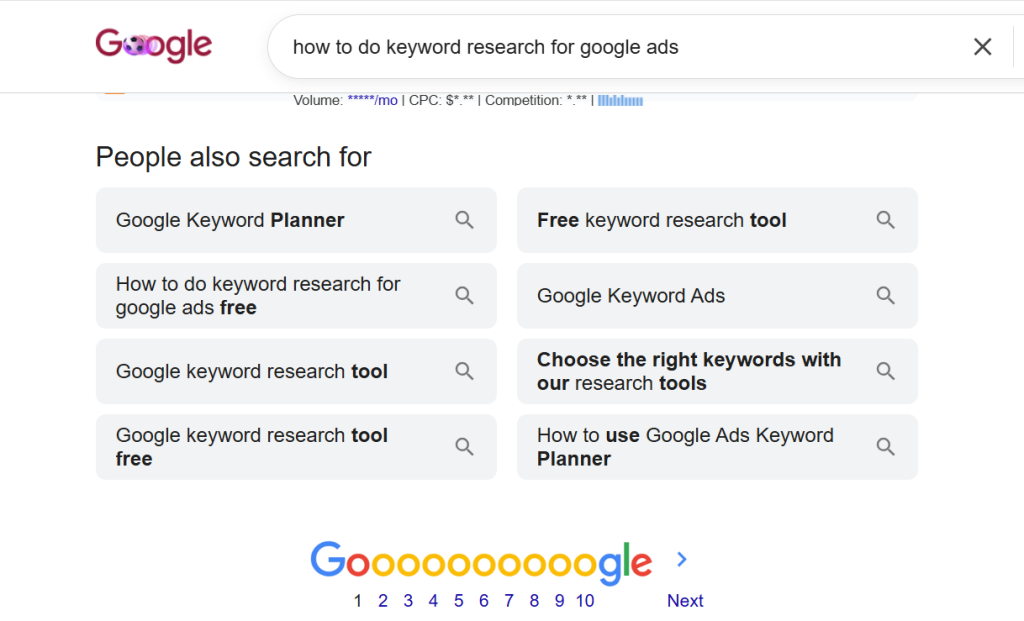
Scroll to the very bottom of a Google search results page.
You will see a section called “Related searches” – usually eight short phrases connected to what you searched.
These are variations and extensions of your original topic that Google knows are connected in searchers’ minds.
If you searched “keyword research for bloggers,” the related searches might include:
“keyword research for bloggers free”
“How to find low competition keywords for a blog”
“best keyword research tool for beginners”
Each of those is another real post idea.
Collect them. Run each one through the same process. The list of potential topics grows quickly.
Check If People Actually Need the Topic
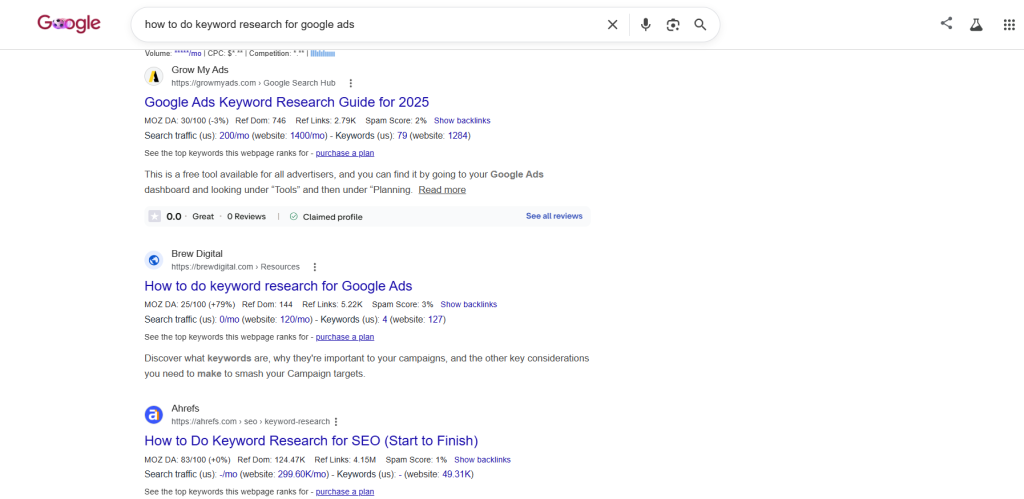
Finding a keyword is step one.
Confirming that real people are searching it with genuine intent is step two.
Here is the simplest way to validate any keyword before writing.
Search the exact phrase on Google and read the first ten results.
Look at the titles.
If multiple established blogs, news sites, or authority publications are ranking for that phrase, search demand is confirmed.
People are searching for it, and Google is sending traffic to it.
Now read those titles carefully.
Ask yourself: what problem is every one of these articles trying to solve?
If five of the top ten results all answer the same question in slightly different ways, that question is the real intent behind the keyword. That is what you need to address in your article.
If the top results look like outdated articles from 2019 or 2020, that is an opportunity.
A fresh, more relevant post on the same topic has a real chance to outrank older content.
If the top results are all from massive domain authority sites like Forbes or HubSpot, the keyword is likely too competitive for a new blog.
Find a more specific variation instead.
Study the Angles Being Used
Look at how each result approaches the topic.
One might be a listicle – “7 ways to do X.”
Another might be a step-by-step guide – “How to do X in five minutes.”
Another might be a comparison – “X vs Y: which one actually works.”
The angle that is missing is often the angle that ranks.
If everyone is writing generic lists, a detailed, practical guide stands out. If everyone is writing long tutorials, a short, direct answer might perform better.
Understanding the competition before writing saves you from publishing something that already exists in a better version.
Turn Keywords Into Titles That Actually Get Clicked
A keyword is not a title.
A keyword is the foundation. A title is what makes someone click.
The difference between a weak title and a strong one is almost always specificity and clarity.
Weak: Business Software
Better: 5 Business Software Every Small Business Needs in 2026
Weak: AppSumo
Better: Is AppSumo Worth It in 2026? Honest Review Before You Buy
Weak: Keyword Research
Better: How to Do Keyword Research for a Blog in 2026 (And Find Keywords People Actually Search)
Notice what changes between weak and strong:
A number gives the reader a clear expectation of what they will get.
A year signals that the content is current and relevant.
A question or problem framed in the title speaks directly to search intent.
Brackets add additional context that increases clicks in search results.
A good title tells the reader exactly what they will learn before they click.
A weak title makes them guess, and when in doubt, they do not click.
When you know your keyword, run it through this filter before publishing:
Does my title make clear what problem this solves?
Does it include a specific detail – a number, a year, a qualifying phrase?
Would I click it if I saw it in Google search results?
If the answer to any of those is no, rewrite the title until it is.
Build Supporting Articles Around One Main Topic
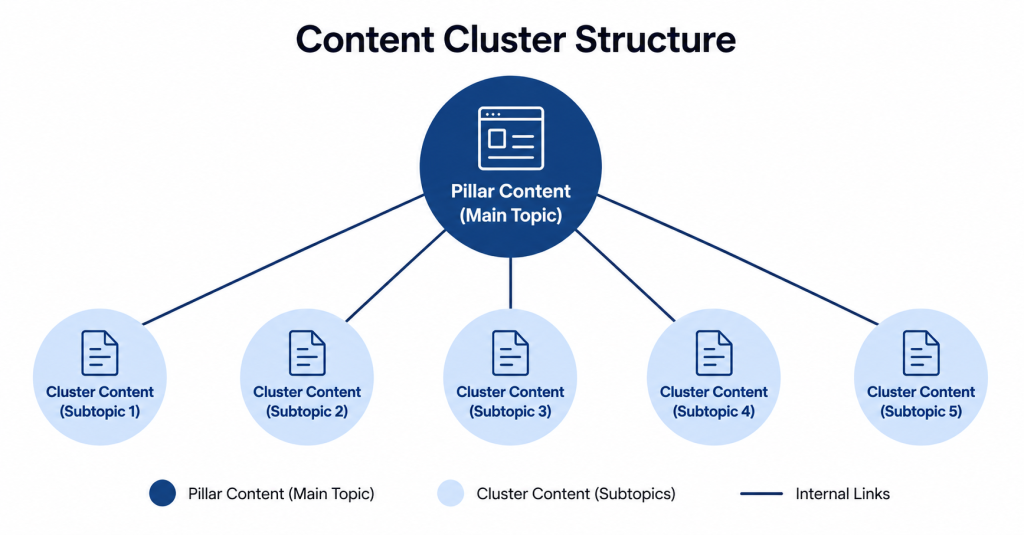
Most beginners make every article standalone.
They write about ten different topics with no connection between them.
That approach makes it very hard to rank for anything.
Google rewards blogs that cover a topic in depth, not just one post, but a cluster of connected posts that together demonstrate real authority on the subject.
Here is how it works.
You write one main article that covers a broad topic at a high level.
Then you write several supporting articles that go deep on specific aspects of that same topic.
Each supporting article links back to the main one. The main one links to each supporting article.
Example cluster:
Main topic: Why Is My Blog Not Showing Up on Google?
Supporting articles:
How to Do Keyword Research for a Blog
How to Know If Google Has Indexed Your Blog
How to Write Blog Posts That Rank on Google
How to Get Backlinks for a New Blog
Each of those supporting articles targets its own specific keyword. Together, they build authority around the broader topic of blog SEO.
When Google sees a site that has covered multiple angles of the same subject thoroughly, it trusts that site as a reliable source on that subject.
That trust translates into rankings.
You do not need a hundred articles to rank. You need five to ten well-connected articles that cover one subject from different angles.
Keyword Research Mistakes That Keep Blogs From Ranking
Most of these mistakes are common, and most are avoidable once you know what to watch for.
Choosing keywords that are too broad.
“Marketing” and “software” are not blog keywords. They are categories.
A new blog cannot rank for single-word or two-word broad terms.
- Go specific.
- Go long.
- Find the phrase a real person would type when they have a specific problem.
Ignoring search intent.
A post about “what is SEO” attracts curious beginners. A post about “how to fix SEO errors on WordPress” attracts bloggers with a specific problem right now.
They are different audiences with different needs. Match your article type to the intent behind the keyword.
Copying competitors without reading them.
Everyone tells you to study your competition.
That is true, but copying their topic list is not research; it is guessing.
Read their articles, look for the questions they did not answer, and find the gaps.
That is where you have a real chance.
Publishing before validating.
Write the keyword into Google before writing the article. If you want to validate whether interest in a topic is growing or declining over time, compare it inside Google Trends before committing to writing.
If you do not see any results at all, there may be no search demand. If you see very established, high-authority results only, the keyword may be too competitive.
Validate before you invest hours in writing.
Keyword stuffing.
Repeating your keyword every three sentences does not help your ranking.
It makes the article unreadable, and Google knows it.
Use your keyword naturally, use variations, and write for the readers first.
Frequently Asked Questions
How do beginners do keyword research for a blog?
Start with Google autocomplete, People Also Ask, and related searches at the bottom of search results pages.
These are free, accurate, and show real search demand. Once you have a list of potential keywords, search each one manually and study the existing results before deciding to write about it.
Can keyword research be done for free?
Yes. Google autocomplete, People Also Ask, Google Trends, and Google Search Console are all free tools that cover most of what a beginner needs.
Paid tools like Ahrefs and Semrush provide more data, but are not necessary to start finding good keywords.
How many keywords should one blog post target?
Focus on one primary keyword per post.
A handful of naturally related secondary phrases will appear on their own as you write.
Trying to target ten keywords in one post weakens the focus of the article and confuses search engines about what the post is actually about.
How do I know if a keyword is too difficult to rank for?
Search the keyword on Google and look at the first page results.
If every result is from a major publication with millions of monthly visitors, the keyword is likely too competitive for a new blog. Look for more specific variations, longer phrases with clearer intent, where the competition is less dominant.
Do keywords still matter in 2026?
Yes. The way Google processes keywords has evolved, but the fundamental principle has not changed.
People still type questions into search engines.
Writing content that matches those questions accurately is still how blogs get found. What has changed is that Google now penalises keyword stuffing more aggressively and rewards genuine depth and relevance more consistently.
Final Verdict
Good keyword research starts before writing.
Not during. Not after.
Before.
Find the question first. Confirm people are searching for it. Study what already exists. Then write something that answers it better.
Write articles for questions. Not for topics.
Build connected clusters instead of isolated posts.
Use free tools before paying for anything.
And validate every keyword with a manual Google search before investing time in writing. If your blog already has published content, review your actual search queries inside Google Search Console to see which keywords are already bringing visitors.
That process – repeated consistently – is how new blogs build traffic that compounds over time.
All methods described reflect publicly available tools and techniques as of June 2026.
Explore More on FutureToolLab
- How to Start a Profitable Blog in 2026 (Beginner’s Guide)
- Is AppSumo Worth It in 2026? Honest Review
- Top 10 Digital Skills to Learn in 2026
Explore more guides, reviews, and practical resources at FutureToolLab.com